


Anti Burn-out Nutrition for the Dentist: …You Are What You Eat!
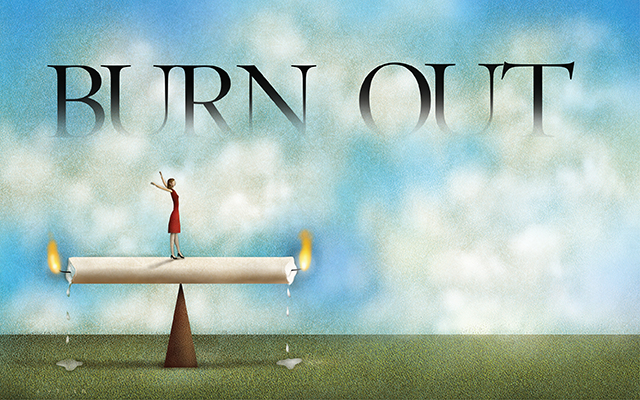
The risk of exposure to the Burn Out Syndrome due to professional stress during the pandemic and beyond – is well known among dentists. The complexity of therapeutic interventions, constant responsibility, fear of dissatisfied patients, high quality standards matching patients’ expectations, poor ergonomics of the profession- expose us to the risk of getting sick with Burn-out Syndrome. Pediatric dentistry further exposes practitioners to the aforementioned risks. And vice versa – the ergonomic organization of the space, the judicious planning of the patients, the rules of internal order, lifelong training, an educated and involved team – can prevent the occurrence of the Burn-out!
But few dentists are aware of the link between nutrition and the burn out syndrome! The first such correlation appears in 1826, in the expression “Tell me what you eat and I will tell you what you are” -in Physiologie du Gout, ou Medetations de Gastronomie by Anthelme Brillat-Savarin who observed that environmental, social and psychological factors change the disposition for the composition of the nutrients consumed; they in turn change the intestinal microbiota; Intestinal hormones change mood and stress levels.
It was initially suggested that more nutrients and food compounds would be involved in triggering and maintaining burn-out disorders, but also in the severity and symptoms of depression. Indeed, recent studies have revealed the link between some mediators of homeostasis (such as: ghrelin, leptin, CCK-cholecistikinin, GLP1-glucagon-like peptide, IGF1-insulin-like-growth factor, AGE-glycosylation products, NPY-neuropeptide, BNDF-neurotrophic factor, glucose metabolism and intestinal microbiota) and mood swings. See fig. 1.
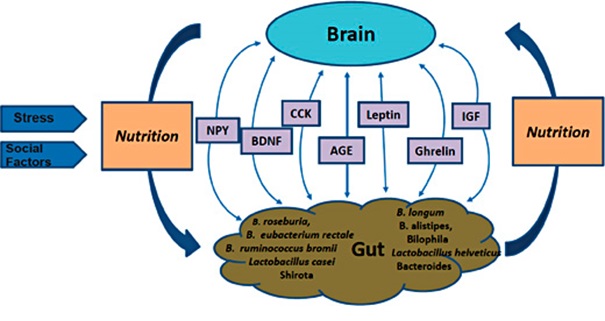
Fig.1
Western food patterns that include sweet drinks, refined foods, processed meat, refined grains, fried foods, high fat intake, sweets, snacks, pastries have been shown to be associated with an increased risk of depression.
Conversely – a number of “healthy” foods – such as fish, olive oil, fruits, vegetables, nuts, vegetables, poultry and poultry and unprocessed meat, as well as unpasteurized natural dairy products – were inversely associated with the risk of burn out and / or depression and even involved in alleviating their symptoms. In addition, a number of nutritional compounds such as Ca – calcium, Cr – chromium, folates, PUFAs polyunsaturated fatty acids, Vitamins D, B12, Zn-zinc, Mg – magnesium, tryptophan – are recommended in the prevention of stress and as part of antidepressant treatment – (in nutritional intervention).
“Healthy” diets such as the Japanese diet (fruits, soy, vegetables, green tea) or the Mediterranean diet containing olive oil, fish, poultry, vegetables, nuts, fruits and dairy products have been associated with a lower incidence of depression.
A prospective quasi-experimental study was conducted in Australia that looked at the impact of a vegetarian and omnivorous diet on emotional state. Interestingly, although vegetarians have a low intake of omega-3 fatty acids compared to omnivores, their anxiety, mood, were more improved.
Another prospective cohort study of 87,618 postmenopausal women investigated the relationship between depression and the Glycemic Index, glycemic load, and other carbohydrate measurements (glucose, total sugars, sucrose, fructose, starch) and showed that a high glycemic index is associated with an increased incidence of developing depression. In contrast, a diet high in fiber, lactose, fruits, and vegetables has been associated with a lower incidence of developing or improving symptoms of depression in elderly patients.
In other words – healthy eating can be a method of prevention but also of treatment of burn-out syndrome and / or depression in dentists.
- Occupational burnout syndrome and post-traumatic stress among healthcare professionals during the novel coronavirus disease 2019 (COVID-19) pandemic. Best Pract Res Clin Anaesthesiol. 2020 Sep;34(3):553-560. doi: 0.1016/j.bpa.2020.07.008. Epub 2020 Jul 18. Jaroslava Raudenská1, Veronika Steinerová 2, Alena Javůrková 1, Ivan Urits 3, Alan D Kaye 4, Omar Viswanath 5, Giustino Varrassi 6
- COVID-19-Related Mental Health Effects in the Workplace: A Narrative Review
Gabriele Giorgi 1, Luigi Isaia Lecca 2, Federico Alessio 3, Georgia Libera Finstad 3, Giorgia Bondanini 3, Lucrezia Ginevra Lulli 4, Giulio Arcangeli 2, Nicola Mucci Int J Environ Res Public Health . 2020 Oct 27;17(21):7857. doi: 10.3390/ijerph17217857.
