




Removal of black stains from teeth by photodynamic therapy: a clinical and microbiological analysis
 Black-pigmented bacteria (BPB) are Gram-negative anaerobic, non-motile, proteolytic rods with a strong involvement in the pathogenesis of periodontal disease.
Moreover, they may compromise aesthetics and contribute to gingival inflammation. The aim of this report is to describe a clinical, alternative therapy for removal of black pigmentation, based on photodynamic therapy (PDT).
Black pigmentation is a dental extrinsic staining defined as a thin, dark pigmented line usually localized at the enamel, following the contour of the gingival margin. It may also manifest as incomplete coalescent small dark dots (≤0.5 mm diameter)— parallel to the gingival margin at dental smooth surfaces—that rarely extend beyond the cervical third of the crown of at least two different teeth.
The stains are usually difficult to remove because there is more calcium and phosphate content in the microbial biofilm of black pigments produced by BPB. Polishing with a rubber cup removes these stains, however, relapse is common using this method.
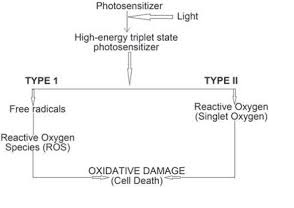
As such, Photodynamic Therapy (PDT) has been suggested as an alternative therapy for the elimination of pathogenic bacteria for the treatment of periodontitis, peri-implantitis and other infections. PDT is based on the concept that non-toxic photosensitizers can be preferentially located in certain tissues and subsequently activated by light of an appropriate wavelength to generate singlet oxygen and free radicals that are cytotoxic to cells of the target tissue.
PDT-induced bacterial killing is able to reduce the microbial count 10-fold when toluidine blue O or erythrosine is used as a photosensitizer.
Briefly, after isolation of the area with sterilized gauze and air-drying of tooth surfaces, a toluidine blue solution photosensitizer was applied to tooth surfaces with a micro brush. The toluidine blue solution consisted of: 1% toluidine blue (10 mg/mL); 0.18% methylparaben and purified water 30 mL. Irradiation was performed with a diode Indium Gallium.
Aluminum Phosphorus (InGaAlP) laser at a 660 nm wavelength, continuously, using 100 mWand a focal spot of 600 mm. PDTwas performed in five sessions—once a week for 5 weeks—according to the area of laser irradiation: (1) anterior mandibular teeth; (2) posterior mandibular teeth; (3) anterior maxillary teeth; (4) posterior maxillary teeth; (5) all tooth surfaces. After the application of a photosensitizer, irradiation was applied at 70 J/cm2 in non-contact mode, for 23 s, near the dental surface. Note: the laser was activated and the optical fibre assembly moved with sweeping strokes in an apico-coronal direction, parallel to the vestibular and lingual surfaces. Proximal areas were treated with prophylaxis. After performing the PDT, removal of the remaining black-pigmented stains was accomplished using Gracey curettes. The blue solution was removed by prophylactic paste and rubber cap. During the PDT, clinical signs of enamel demineralization were observed, which was accompanied by hypersensitivity being felt by the patient. Considering this, topical neutral fluoride was applied to the treated teeth for 1 min at postoperative follow-up.
Previous attempts at stain removal by professional prophylaxis were unsuccessful, with recurrence of the lesions within 30 days, which had a negative impact in the patient’s self-confidence and quality of life.
However, it has been mostly reported that there is an association of pigment with lower indices of caries lesions.
 A negative collateral effect reported by the patient was the development of postoperative hypersensitivity, probably related to the effect of enamel demineralisation by the laser, with blue toluidine application. Management of this condition included topical application of a neutral fluoride solution, resulting in complete remission of signs and symptoms of enamel demineralization and hypersensitivity.
Bibliography:
- Removal of Black Stains from teeth by photodynamic therapy: clinical and microbiological analysis, 5 Decembrie 2015.Larissa Pessoa, Virgilio Galvao, Carla Damante, Adriana Campos, Passanezi Sant Ana;
