




What you need to know as an entrepreneur dentist about your website
Are you a dentist and do you have your own dental office? Congratulations! It’s the first step toward entrepreneurship.
Now you have many more responsibilities and you need to educate yourself as an entrepreneur. You don’t have to know them all, but you do have to know a little bit of everything and know how to ask the right questions to make your time and business more efficient.
I wrote here about the importance of digitization and How digitization can change pediatric dentistry.
An important tool for digitization, marketing and advertising is the website of your dental practice.
Read about “10 reasons why your dental practice needs a website in 2021” before you continue reading this article.

Now that you want to digitize your dental practice and understand the importance of a website, let’s see what you need to know, as an entrepreneur about your website.
Can I make my website?
Of course, you can make your website. Like, I can pull out a tooth on my own. But the experience in both cases can be quite painful.
You can find on the internet hundreds of tutorials on how to make your website, what platforms to use to implement your website. And, yes, I’ve found lots of tutorials on how you can pull your teeth at home. Methods are: from the famous thread tied to the doorknob to the tongs disinfected with alcohol.
This is also the case with a website. You can make your website. There are methods. You can use WordPress with a free or premium theme, you can use Wix or other platforms specially created for you to build your website.
And then, the question that comes up is: why do I need a programmer?
Why do you need a programmer to implement a website for your dental practice?
Because your time is precious and you would prefer to use it to grow your business, for your team or your family or specialize in your field of activity.
Because your experience with a website comes down to that of a user and because it takes time to understand concepts like HTTP, HTTPS, SSL, PHP, MySQL, HTML, CSS, js …, UX / UI, SEO, the user experience in the site and much more.
Because you want your website to be able to offer the user, your future patient, the ideal experience to learn about your dental services.
Because you can use your time to educate patients, through the articles you can write on your website.
How much does it cost to implement a website for a dental practice?
If you decide that you want to allocate time and nerves to implement your website, you only need time, domain and hosting budget.
The time you can allocate is limited. So think carefully before you start.
Web domains are paid annually and prices vary by domain name and extension. You can find domains from 1 Euro/year to thousands of euros for the super searched domains. .ro domains have prices starting from 6.5 Euro + VAT per year, depending on the reseller or if you purchase other additional services, such as a hosting package.
Website hosting or hosting is the service through which website files are stored on a web server with a permanent internet connection, guaranteed up-time and high bandwidth (internet).
The server is a computer specially designed to be able to host several sites and provide the resources necessary for the operation of each.
The hosting service and the price for this service depend on the ISP (internet service provider), the size of the website, the resources that are needed for it to function in optimal parameters, the technical configuration and the performance of the server.
So, remember that every year, you need to allocate your budget for the renewal of the domain and the payment of the hosting! You can register a domain for a maximum of 10 years and you can pay in advance. Web hosting is paid annually and cannot be paid in advance for several years.
If you have concluded that your time is precious and you want to turn to a specialized web development company or a freelancer then this question is not the one with which you should start the discussion about the website.
To get the right price and a website to serve your business plan, you need to explain exactly what you want from it. You need a brief, as accurate and complete documentation as possible about the website and how you want the website to work.
Use this brief/documentation and request offers from multiple companies and/or freelancers. You will be able to choose what suits you best as price and the way of working and communicating.
Programmers are people with whom you will find it difficult to communicate.
But let’s start with the beginning, namely the truth: Programmers are people with whom it is difficult to communicate. Not because they are socially inept, although this can sometimes be true, but because you as a non-technician do not understand 100% how they do their job.
Let me tell you a secret: computers are useless machines, as long as there is no one to tell them exactly what to do. And programmers are exact, precise people and you have to respect them and try to learn their language. This is the first step.
The second step is the most fun, even talking to them.
Learn how to write the requirements for your website
One of the biggest frustrations for a programmer is to hear: No, no, that’s not what I meant, and that’s after he worked to implement what you asked him, or think you asked him.
Writing what you want as unambiguously as possible and feature by feature is a sign of respect for the programmer. He won’t have to guess how you want what you thought to work.
Having well-written requirements will help you work with a much better, more efficient and better programmer, it will make you think seriously about your idea.
If you don’t know where to start, think of MoSCoW, no, not Moscow.
The term MoSCoW is an acronym derived from the first letter of each of the 4 prioritization methods (Must Have, Should Have, Could Have and Won’t Have).
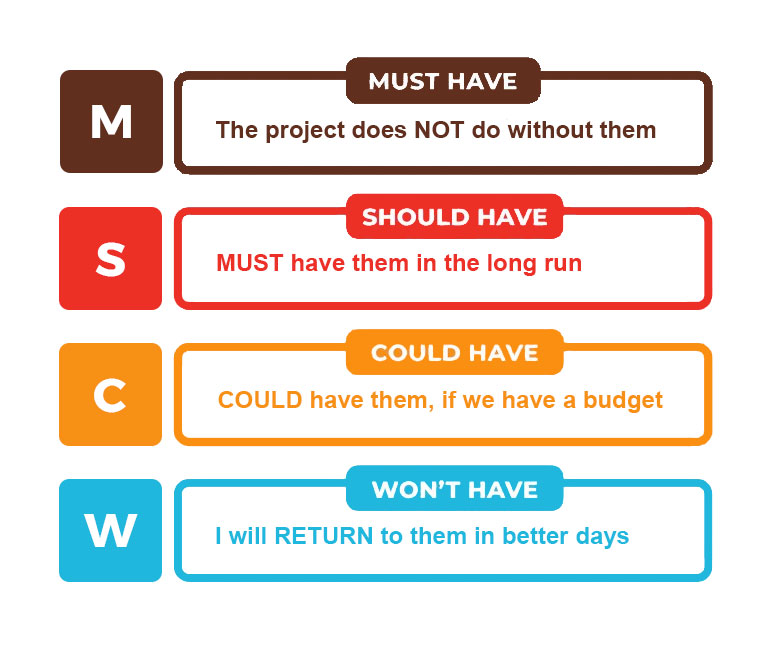
Must Have are the priority requirements, without which your project cannot work, cannot be launched. The question you need to ask each requirement is: Can we move forward with the project if this requirement is not met? If NOT, then it’s a MUST.
Should Have are secondary requirements, they are considered important, but not crucial. The question you need to ask each requirement is: Can we launch the project if this requirement is not met? If the answer is YES, then this is a SHOULD.
Could Have are less important requirements than the other 2, but it would be nice to have them in the project. Traditionally, these requirements are met if the project has a budget (time and money). In product development, we can call them low-cost requirements. The question is: Can we sacrifice this requirement to the end? If YES then this is a Could Have.
Won’t Have are that kind of requirements that the project should have or would like to have, but we’re not sure if we have the time and money to implement them or if they’re useful. Not having it does not mean that you do not implement them, but that you return to these requirements in the better days. The question is: Can we get back to them when things are going better? If YES, then we move them to Won’t Have
Build an MVP (minimum viable product)
An MPV (Minimum Viable Product) is a product that contains a minimal set of key features that allow you to launch the concept you are working on in the shortest possible time with minimal effort and cost.
Be modest. Remember that you need an MVP – minimum viable product to launch the product so keep only the minimum required in the initial requirements. Try not to wake up asking for a “small” feature, because the time and process of realization may be longer than you think.
Draw the structure of the website as you see it
In specialized terms wireframe.
Must Have are the priority requirements, without which your project cannot work, cannot be launched. The question you need to ask each requirement is: Can we move forward with the project if this requirement is not met? If NOT, then it’s a MUST.
Should Have are secondary requirements, they are considered important, but not crucial. The question you need to ask each requirement is: Can we launch the project if this requirement is not met? If the answer is YES, then this is a SHOULD.
Could Have are less important requirements than the other 2, but it would be nice to have them in the project. Traditionally, these requirements are met if the project has a budget (time and money). In product development, we can call them low-cost requirements. The question is: Can we sacrifice this requirement to the end? If YES then this is a Could Have.
Won’t Have are that kind of requirements that the project should have or would like to have, but we’re not sure if we have the time and money to implement them or if they’re useful. Not having it does not mean that you do not implement them, but that you return to these requirements in the better days. The question is: Can we get back to them when things are going better? If YES, then we move them to Won’t Have
Build an MVP (minimum viable product)
An MPV (Minimum Viable Product) is a product that contains a minimal set of key features that allow you to launch the concept you are working on in the shortest possible time with minimal effort and cost.
Be modest. Remember that you need an MVP – minimum viable product to launch the product so keep only the minimum required in the initial requirements. Try not to wake up asking for a “small” feature, because the time and process of realization may be longer than you think.
Draw the structure of the website as you see it
In specialized terms wireframe.
Must Have are the priority requirements, without which your project cannot work, cannot be launched. The question you need to ask each requirement is: Can we move forward with the project if this requirement is not met? If NOT, then it’s a MUST.
Should Have are secondary requirements, they are considered important, but not crucial. The question you need to ask each requirement is: Can we launch the project if this requirement is not met? If the answer is YES, then this is a SHOULD.
Could Have are less important requirements than the other 2, but it would be nice to have them in the project. Traditionally, these requirements are met if the project has a budget (time and money). In product development, we can call them low-cost requirements. The question is: Can we sacrifice this requirement to the end? If YES then this is a Could Have.
Won’t Have are that kind of requirements that the project should have or would like to have, but we’re not sure if we have the time and money to implement them or if they’re useful. Not having it does not mean that you do not implement them, but that you return to these requirements in the better days. The question is: Can we get back to them when things are going better? If YES, then we move them to Won’t Have
Build an MVP (minimum vible product)
An MPV (Minimum Viable Product) is a product that contains a minimal set of key features that allow you to launch the concept you are working on in the shortest possible time with minimal effort and cost.
Be modest. Remember that you need an MVP – minimum viable product to launch the product so keep only the minimum required in the initial requirements. Try not to wake up asking for a “small” feature, because the time and process of realization may be longer than you think.
Draw the structure of the website as you see it
In specialized terms wireframe
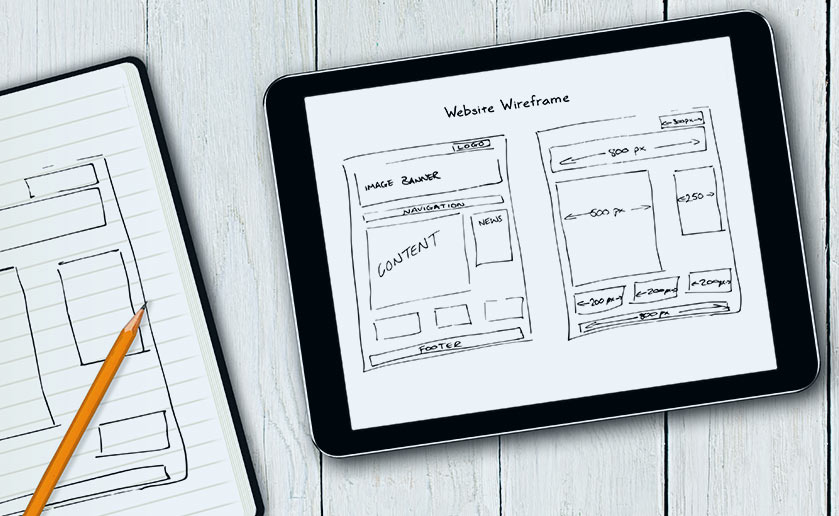
Draw by hand and includes drawings in specifications. The programmer wants to know how you imagine the page of the site you are referring to looks like. If you find it difficult, look for at least 5 examples of websites that you liked and write down exactly what you liked and what you didn’t like about each one.
It is preferable to have a branding manual for your business. A branding manual is a document (it does not have to be physical, it can be digital) that offers a set of rules on how the visual identity of your brand can be used in internal and external communication processes. From the rules related to the application of the logo to the definition of fonts and colours to the drawing of the general lines of the brand communication materials, a brand manual helps you to keep the visual coherence in your website as well.
And then, using the directions in the branding manual, your awkward designs can turn into sensational web pages.
Use open ideas
Or better yet, don’t use closed ideas. Your idea must have a beginning and an end. If you hear the term platform pronounced with the thought that it does everything for you, take a 2-week break to rethink the idea of the website.
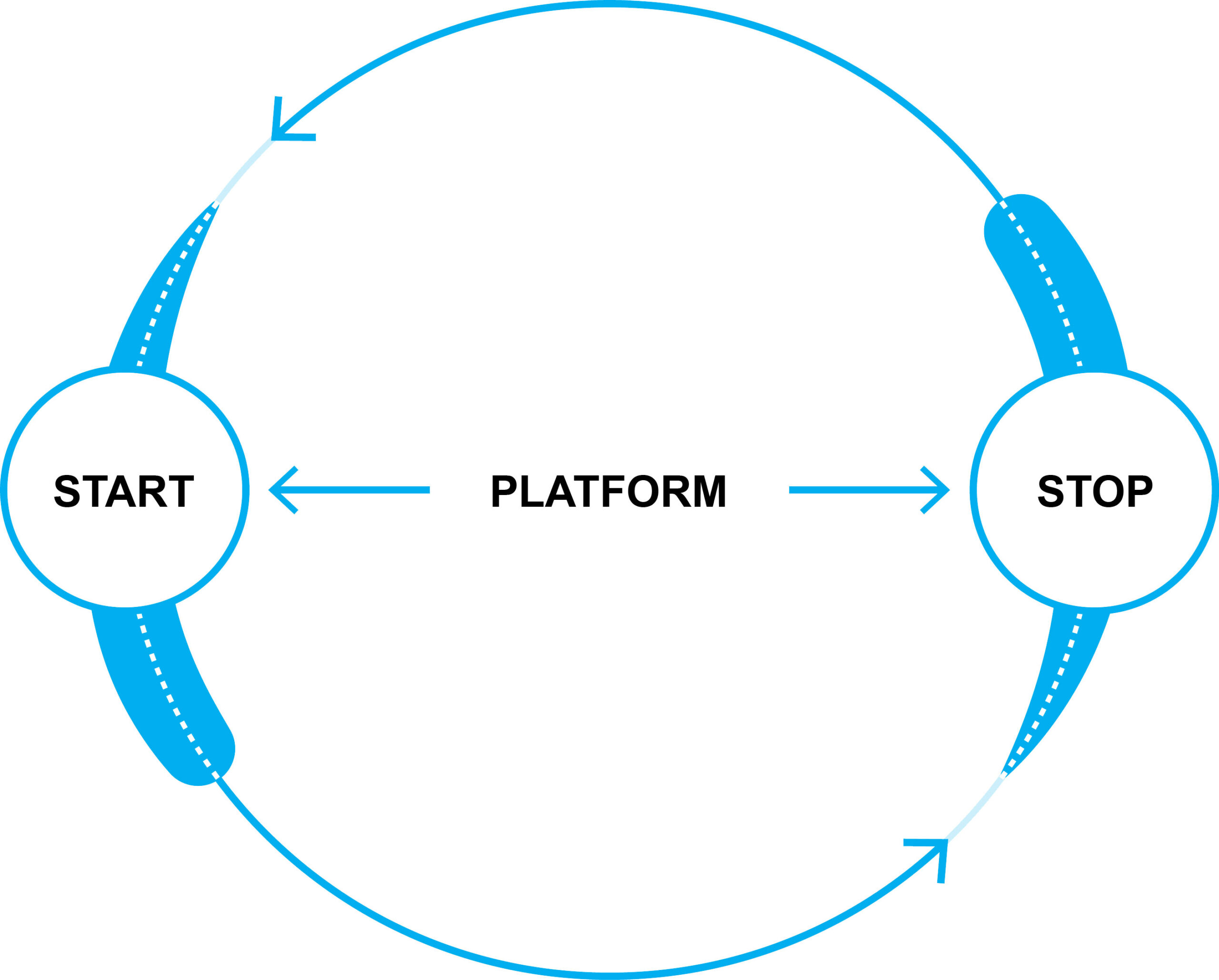
Maybe, after you have all the ideas structured, the programmer will use a platform to implement your website. But, the platform you have chosen may not be the best solution for the website you want. And then, don’t restrict the creativity and knowledge of the web developer and yours by saying the word platform.
And, after you have received the proposals for the implementation of the website, review the initial allocated budget, compare the implementation proposals (customized or using existing platforms) and choose the solution that suits you best.
Then swallow your ideas after the programmer has started working on your project. Resist the temptation to add more features and functionality. Remember that you need an MVP on which to build your website. Write down the ideas and after the website launch discuss the new functionalities using the same technique presented above (MOSCOW).
Do you already have a website? What do you need to know about it?
Do you already have a website up and running and you don’t know what to do with it?
My first thought is that you should have a budget and collaborators or dedicated people for the following: content, maintenance, upkeep, SEO optimization, promotion and marketing.
The content of your dental office website can be written by you, your collaborating dentists and other colleagues. It can be reviewed and improved by a content writer, preferably with SEO knowledge. You will see below why.
If you want to provide video content, it can be done by you or your collaborators, who specialize in this type of content. Here, you may need video editing knowledge or someone with video editing skills. So, consider this cost as well.
The maintenance and upkeep of a website are necessary for the conditions in which the web technology evolves rapidly, new requirements appear, updated programming languages and the low loading speed of the site is a defining criterion in SEO. So you need a collaborator on the programming side for the maintenance, upkeep and modification part. Set what you want to improve and set a budget for it.
Talk to the web design agency that implemented your website and see if it offers the above services and what the monthly costs would be.
If the agency’s programmers also specialize in technical SEO, give them an extra point in collaboration and discuss the SEO optimization part. Remember that a positive result, visible in Google search results, can be obtained after at least 6 months of optimization.
SEO specialists are usually people without programming knowledge and then, for content optimization and gaining additional positions in Google, you need people or agencies specialized in content SEO to increase visibility in search engines.
Marketing and promotion specialists will help you grow your business through specialized paid marketing and promotion services on various communication channels: in social media (Facebook, Instagram), Google Ads (includes youtube ads) or offline. And here, you might find specialized agencies only on a certain channel, and depending on that, you need to establish your marketing and promotion strategy and budget.
Programmers are smart people, but you’re smart too. We just need to be able to speak a common language.
So, for language release or any online issue, let’s talk to see how we can grow the business you own online!
